
The short answer
Indoor air quality service means checking and improving how your HVAC system filters, moves, and ventilates the air in your home. AirEdge inspects filters, ducts, airflow, humidity, and ventilation, then explains whether a simple repair, a filtration upgrade, or added equipment makes sense for your home.
The air inside your home passes through your heating and cooling system many times a day. When filters clog, ducts leak, or airflow drops, that system can spread dust and odors instead of removing them. In Los Angeles, dry summers, fall Santa Ana winds, and dust from busy roads and nearby construction all put extra load on a home's filtration. AirEdge HVAC Repair Service checks how your system handles indoor air and recommends practical fixes for homes across Los Angeles and nearby cities. Below you'll find the warning signs, what we inspect, your repair and upgrade options, what affects the cost, and how a visit works.
Signs Your Home Needs Indoor Air Quality Service
Poor indoor air often builds slowly, so it's easy to get used to it. Pay attention to patterns: problems that get worse when the system runs, show up in certain rooms, or flare up during windy or smoky stretches usually point to something in the HVAC system.
Common signs include:
- Dust settles on furniture soon after you clean, especially near supply vents
- Gray or dark streaks around vent covers or on the ceiling next to them
- Musty, stale, or burning smells when the heat or air conditioning turns on
- Allergy symptoms, stuffy noses, or dry eyes that ease when you leave the house
- Rooms that feel stuffy or stale even when the temperature is right
- Air that feels very dry in winter, or a damp, clammy feel in some rooms
- Filters that look heavily loaded long before their normal replacement time
- Lingering smoke or dust indoors for days after a Santa Ana wind event
What We Check During an Indoor Air Quality Visit
Air quality problems rarely have a single cause. Our technician looks at the full path air takes through your home, from the return grilles to the supply vents, to find where dust, moisture, or odors are getting in or building up.
- Filter type, size, fit, and condition, including gaps that let air bypass the filter
- Return air grilles and return ducts for leaks that pull in attic, crawlspace, or garage air
- Supply ducts and connections for disconnected runs, crushed sections, and visible debris
- Blower wheel and evaporator coil for dust buildup and signs of moisture or growth
- Condensate drain pan and line for standing water or slow drainage
- Airflow at the vents and overall system airflow, since weak airflow reduces filtration
- Humidity levels in the home and how the system is handling moisture
- Bathroom and kitchen exhaust and any fresh-air ventilation the home already has
- Signs of combustion problems on gas furnaces, such as soot or scorching near the burners
Repair vs. Replace: Your Options
Many indoor air quality problems can be solved with repairs to the system you already have. Replacing a poorly fitting filter rack, sealing leaky return ducts, reconnecting a loose duct run, cleaning a dirty blower or coil, and clearing a clogged condensate drain can make a noticeable difference without new equipment. We start with these fixes whenever they address the problem.
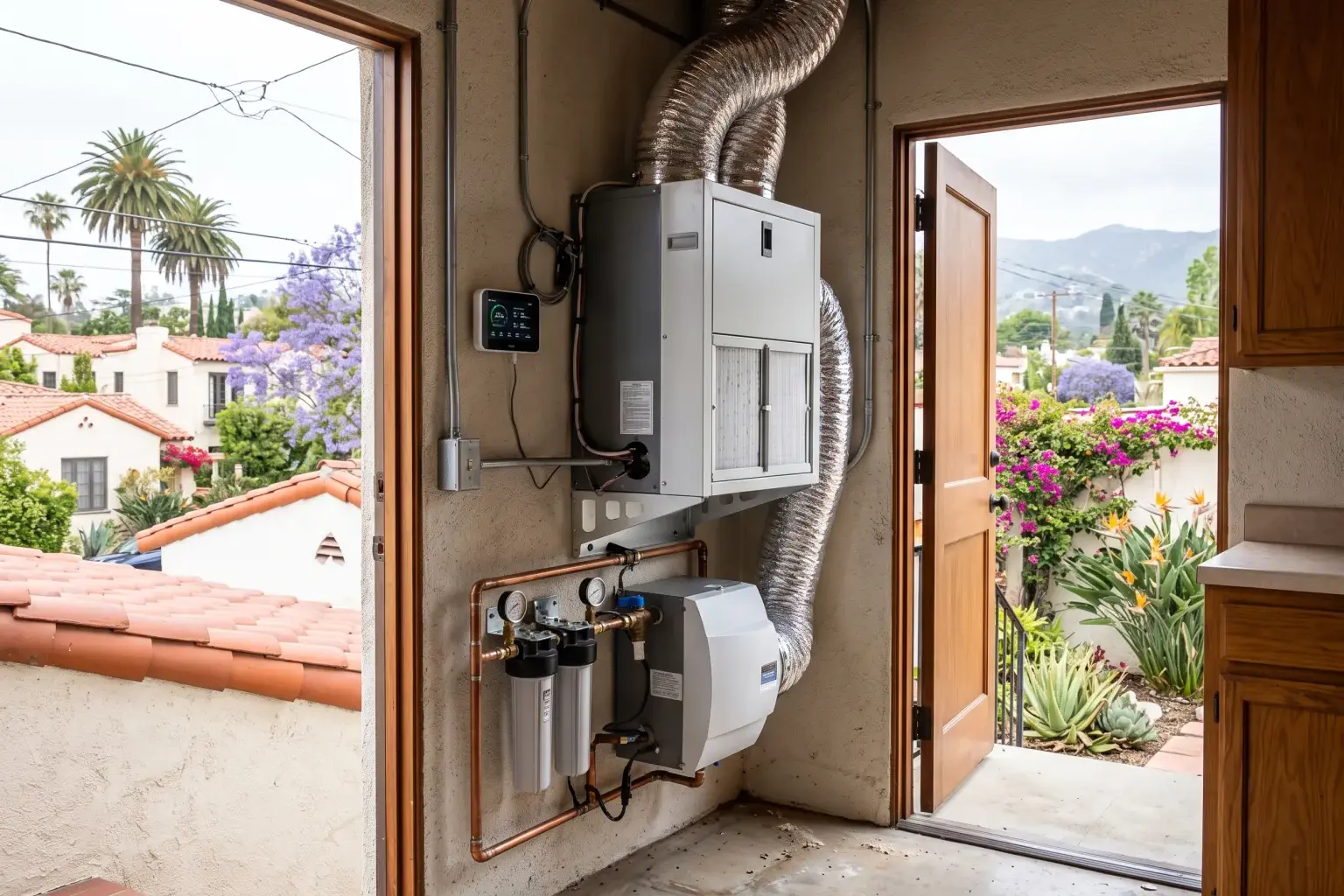
When repairs aren't enough, upgrades can help. Options include a deeper media filter cabinet that captures finer particles with less airflow restriction, ventilation equipment that brings in filtered outdoor air, and humidifiers or dehumidifiers for homes that run too dry or too damp. Not every home needs every product, and we'll explain what each one does and whether it fits your home and system before you decide.
Sometimes the HVAC system itself is the issue, such as an old blower that can't push air through a better filter or ductwork that's badly damaged. In those cases we'll walk through repairing, upgrading, or replacing the system. If you're considering replacing a gas furnace, note that South Coast AQMD Rule 1111 limits emissions from gas furnaces sold and installed in this region and is being amended toward zero-emission requirements, so it's worth checking the current rule. If a heat pump is on the table, LADWP customers may qualify for rebates on eligible systems; homes served by Southern California Edison have different programs, and we confirm the current offer for your address before quoting it.
What Affects the Cost
We give you a clear written estimate after the inspection, before any work begins. The final cost depends on what we find and which options you choose. The main factors include:
- Whether the fix is a repair, a filtration upgrade, or new equipment
- The size of your home and how many systems serve it
- Where your ductwork runs, since attics and tight crawlspaces take longer to work in
- How much duct sealing, repair, or replacement is needed
- Whether new equipment requires electrical, drain, or duct modifications to install
- The type of filtration, ventilation, or humidity equipment you select
- Any permits required for the work in your city
How an Indoor Air Quality Visit Works
When you contact us, we'll ask what you're noticing, which rooms are affected, and when the problem seems worse. That helps the technician come prepared. We schedule a time that works for you and let you know when the technician is on the way.
At your home, the technician talks with you about your concerns, then inspects the system, ductwork, filters, and ventilation. They'll show you what they find, including photos of hard-to-reach areas like the attic or the inside of the air handler, so you can see the problem for yourself.
Next, we explain your options in plain terms, starting with the simplest fix that addresses the problem. You'll get a written estimate for each option. There's no pressure to choose an upgrade if a repair will do the job. If you approve the work, we can often handle smaller repairs during the same visit. Larger jobs are scheduled at a time that suits you. Before we leave, we'll explain how to change your filter, how often to check it, and what to watch for during dry, windy, or smoky weather.