The short answer
If your furnace won't heat, keeps cycling on and off, or makes new noises or smells, it likely needs repair. AirEdge finds the cause, explains your repair and replacement options, and gets your approval before any work begins. Most furnace problems are fixable. A cracked heat exchanger or repeated failures on an aging unit can make replacement the better choice.
Los Angeles winters are mild, but cold nights in the valleys and foothills still make a working furnace matter. Many furnaces here sit idle for most of the year, so problems often show up the first chilly evening you turn the heat on. You might notice a burning smell that won't fade, a blower that runs without heat, or a system that won't start at all. AirEdge HVAC Repair Service diagnoses and repairs gas furnaces in homes across Los Angeles and nearby cities. This page covers what to watch for, what we check, and how we help you decide between repairing and replacing.
Signs Your Furnace Needs Repair
Some furnace problems are obvious, like no heat at all. Others build slowly and are easy to dismiss until the system quits on a cold night. Schedule service if you notice any of the following:
A short burning-dust smell the first time you run the heat each fall is normal and should clear within an hour. If you smell gas (a rotten-egg odor) or your carbon monoxide alarm goes off, don't troubleshoot. Leave the house, then call your gas utility or 911 from outside.
- The furnace won't turn on, or the blower runs but only cool air comes out of the vents
- It starts, then shuts off after a few minutes, over and over
- A burning smell that lasts well past the first hour of the season
- Banging, scraping, squealing or rumbling from the cabinet or ductwork
- Some rooms stay cold while others are comfortable
- The burner flame looks yellow or flickers instead of burning a steady blue
- The thermostat calls for heat but nothing happens
- Your carbon monoxide alarm sounds, or people in the home get headaches or feel nauseated when the heat runs
What We Check on a Furnace Repair Visit
A furnace repair visit starts with finding the actual cause, not just treating the symptom. Our technician works through the system in a set order so nothing gets skipped:
We also check for carbon monoxide around the furnace and in the living space. If we find a cracked heat exchanger or a venting problem that could let combustion gases into the home, we'll show you what we found. We may need to shut the furnace off until it's fixed.
- Thermostat settings, wiring and power to the unit
- Ignition parts: the hot surface igniter or pilot assembly, and the flame sensor
- Gas valve operation and burner condition
- Heat exchanger, inspected for cracks, rust or signs of overheating
- Limit switches, rollout switches and other safety controls
- Inducer motor, pressure switch and venting, including the flue path out of the house
- Blower motor, capacitor, belt if equipped, and blower wheel
- Air filter and return airflow, since a clogged filter causes many overheating shutdowns
- Control board error codes and wiring connections
- Condensate drain and trap on high-efficiency models
Repair or Replace?
Most furnace problems can be repaired. Igniters, flame sensors, capacitors, pressure switches and blower motors are common parts, and replacing one can put an otherwise sound furnace back in service. Furnaces in Los Angeles run fewer hours than furnaces in colder parts of the country, so many older units still have useful life left.
Replacement is worth considering when the heat exchanger is cracked, when a major part fails on a furnace that's already near the end of its service life, when repairs keep stacking up, or when replacement parts are no longer made. We'll lay out both paths, tell you which one we'd lean toward, and explain why.
If you do replace, a few local factors matter. South Coast AQMD Rule 1111 limits nitrogen oxide emissions from gas furnaces sold and installed in the Los Angeles region, and the district has been amending it toward zero-emission requirements. The district sets and revises the compliance dates, so check the current rule before planning a new gas furnace. We do the same before recommending equipment.
That's one reason some homeowners look at a heat pump, which heats and cools in one system and suits our mild winters. LADWP residential electric customers can apply for rebates on qualifying heat pump systems through LADWP's Consumer Rebate Program. The amount depends on the unit's SEER2 and HSPF2 ratings, and you apply after the equipment is purchased and installed, within 12 months of purchase. Many homes outside the City of Los Angeles are served by Southern California Edison instead, so the rebates available to you depend on your address. We confirm the current offer before quoting it. The federal 25C tax credit only covered heat pumps placed in service before December 31, 2025, so it doesn't apply to new installations.
What Affects the Cost of a Furnace Repair
We can't give an accurate repair cost until we know what's wrong. These are the main things that affect it:
Before any repair begins, we explain what we found and what it will cost, and you decide whether to go ahead.
- Which part failed, and whether it's a common part or a model-specific one
- Whether the part is on the truck or needs to be ordered
- Where the furnace is installed: a garage closet is quicker to work on than a tight attic or crawl space
- The age and type of furnace, including standard versus high-efficiency condensing models
- Whether more than one problem turns up, such as a failed part plus the clogged filter that caused it
- Timing, such as a visit outside regular hours
How a Furnace Repair Visit Works
When you contact us, we'll ask what the furnace is doing, how old it is if you know, and where it's installed. Those answers help the technician bring the parts most likely to be needed.
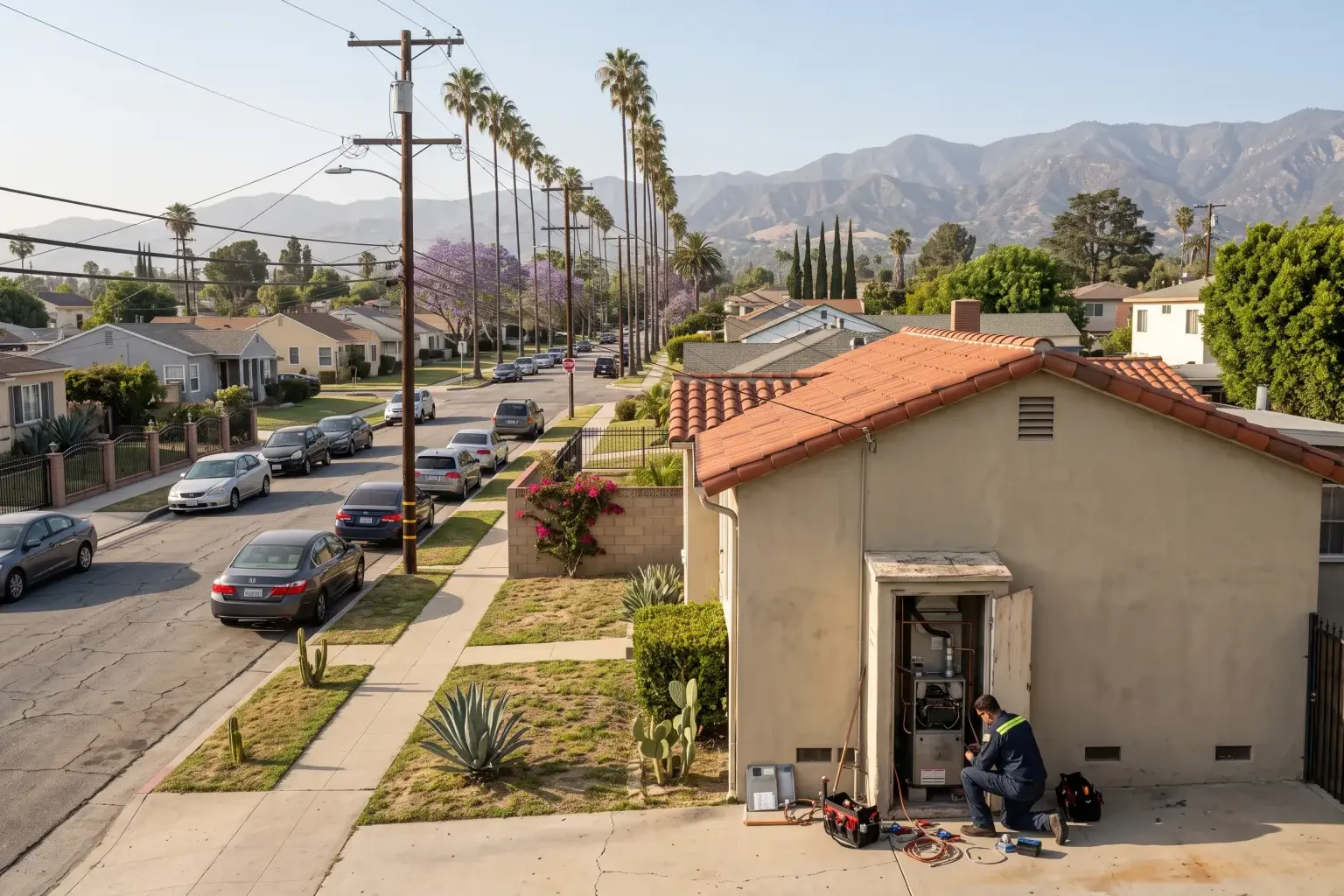
When the technician arrives, they'll ask about the symptoms, then inspect and test the system. Once the cause is clear, you'll get a plain explanation and your options. With your approval, we make the repair and run the furnace through a full heating cycle to confirm it lights, heats and shuts off correctly.
Before leaving, we'll walk you through what was done and point out anything worth watching, such as a filter that needs changing more often or a part that's showing wear. Furnaces here often sit unused from spring through fall, and Santa Ana winds can push dust into return vents. Checking the filter before the first cold night of the season can prevent a lot of problems.
Furnace Repair by city
- Furnace Repair in InglewoodLocal service & repairs
- Furnace Repair in Huntington ParkLocal service & repairs
- Furnace Repair in VernonLocal service & repairs
- Furnace Repair in HawthorneLocal service & repairs
- Furnace Repair in GardenaLocal service & repairs
- Furnace Repair in South GateLocal service & repairs
- Furnace Repair in LynwoodLocal service & repairs
- Furnace Repair in MaywoodLocal service & repairs
- Furnace Repair in CudahyLocal service & repairs
- Furnace Repair in ComptonLocal service & repairs
- Furnace Repair in BellLocal service & repairs
- Furnace Repair in LawndaleLocal service & repairs