The short answer
It's usually time for a new AC when repairs keep coming back, rooms won't cool, or the system can't keep up with summer heat. AirEdge sizes each system to your home and ductwork, explains your repair, replacement, and heat pump options, and confirms which utility rebates apply before quoting.
A new air conditioner is a big decision, and in Los Angeles it is also a practical one. Summers are dry and long, and inland neighborhoods and the valleys run much hotter than areas near the coast. Fall Santa Ana winds can bring hot, dry spells well after summer should be over. AirEdge HVAC Repair Service installs central air conditioners, heat pumps, and ductless systems for homeowners in Los Angeles and nearby cities. This page explains when replacement makes sense, what we look at before recommending a system, what affects the cost, and what to expect from the first visit through installation day.
Signs It's Time for a New Air Conditioner
Not every struggling AC needs to be replaced. But some patterns point toward a new system rather than another repair.
If one or two of these sound familiar, a repair may still be the right call. We'll tell you plainly which side of the line your system is on.
- Replacement parts are hard to find, or the system uses an older refrigerant that is being phased out.
- Repairs keep coming back, especially on major parts like the compressor or outdoor coil.
- Some rooms never cool down, even with the thermostat set low and a clean filter.
- The unit runs almost nonstop on hot afternoons and still can't keep up.
- Your summer electric bills keep climbing without any change in how you use the house.
- You're adding square footage, converting a garage, or finishing an attic.
- You want to replace a gas furnace and separate AC with a single heat pump system.
What We Check Before Recommending a System
A new air conditioner only performs as well as the house and ductwork around it. Before we recommend equipment, we look at how your home actually gains and holds heat.
This is how we size the system. An oversized unit cools quickly but shuts off before it removes much humidity, and the constant short cycles wear it out. An undersized unit runs all afternoon and still loses ground during a heat wave. A home in an inland valley often needs a different answer than a similar house a few miles from the beach.
- The size and layout of the home, ceiling heights, and how many rooms face west or south
- Attic and wall insulation and the condition of windows
- Ductwork: size, routing, leaks, crushed or disconnected runs, and insulation on ducts in hot attics
- Return air paths, so air can flow back from closed bedrooms
- The electrical panel and the circuit serving the outdoor unit
- Where the outdoor unit sits, including clearance, sun exposure, and noise toward neighbors
- The existing furnace or air handler, and whether it should stay or be replaced at the same time
Repair vs. Replace: Your Options
If your current system can be fixed at a reasonable cost and has useful life left, we'll say so. When replacement makes more sense, most homes fall into one of a few paths.
Heat pumps suit Los Angeles winters well, and they can open up rebate options. LADWP residential electric customers can apply for Consumer Rebate Program rebates on qualifying heat pump systems, with the amount based on the unit's SEER2 and HSPF2 ratings. The application is filed after the equipment is purchased and installed, within 12 months of purchase. Many homes outside the City of Los Angeles are served by Southern California Edison instead, so the rebates available to you depend on which utility serves your address. We confirm the current offer before we quote it.
The federal Energy Efficient Home Improvement Credit (25C) only covered qualifying heat pumps placed in service before December 31, 2025, so it does not apply to new installations now.
If you're replacing a gas furnace along with your AC, keep South Coast AQMD Rule 1111 in mind. It limits NOx emissions from gas furnaces sold and installed in the region, and the district has been amending it toward zero-emission requirements. The district sets and revises the compliance dates, so check the current rule before choosing between a new furnace and a heat pump.
- Replace the outdoor condenser and indoor coil as a matched set, and keep a furnace that is still in good shape.
- Replace the full system, including the furnace or air handler, so every component is designed to work together.
- Install a heat pump, which cools in summer and heats in winter with one system and can replace or back up a gas furnace.
- Add a ductless mini-split for a room addition, converted garage, or area your ducts don't reach.
What Affects the Cost of AC Installation
Every installation is quoted for the specific home. These are the factors that change the scope of the job the most.
We'll lay out the options side by side so you can see what changes between them and why.
- System type: central AC, heat pump, or ductless mini-split
- Capacity, based on the size and heat load of the home
- Efficiency ratings (SEER2 for cooling, HSPF2 for heat pump heating)
- Whether the furnace or air handler is replaced too
- Ductwork repairs, changes, or full replacement
- Electrical work, such as a new circuit or panel upgrade
- Access to the attic, crawlspace, or a rooftop equipment location
- Permit and inspection requirements in your city
- Utility rebates that may apply after installation
How an Installation Visit Works
The first visit: a technician looks at your existing system, ductwork, and electrical service, and asks about comfort problems like hot rooms, noise, or dust. You'll get clear recommendations and a written quote you can compare and think over.
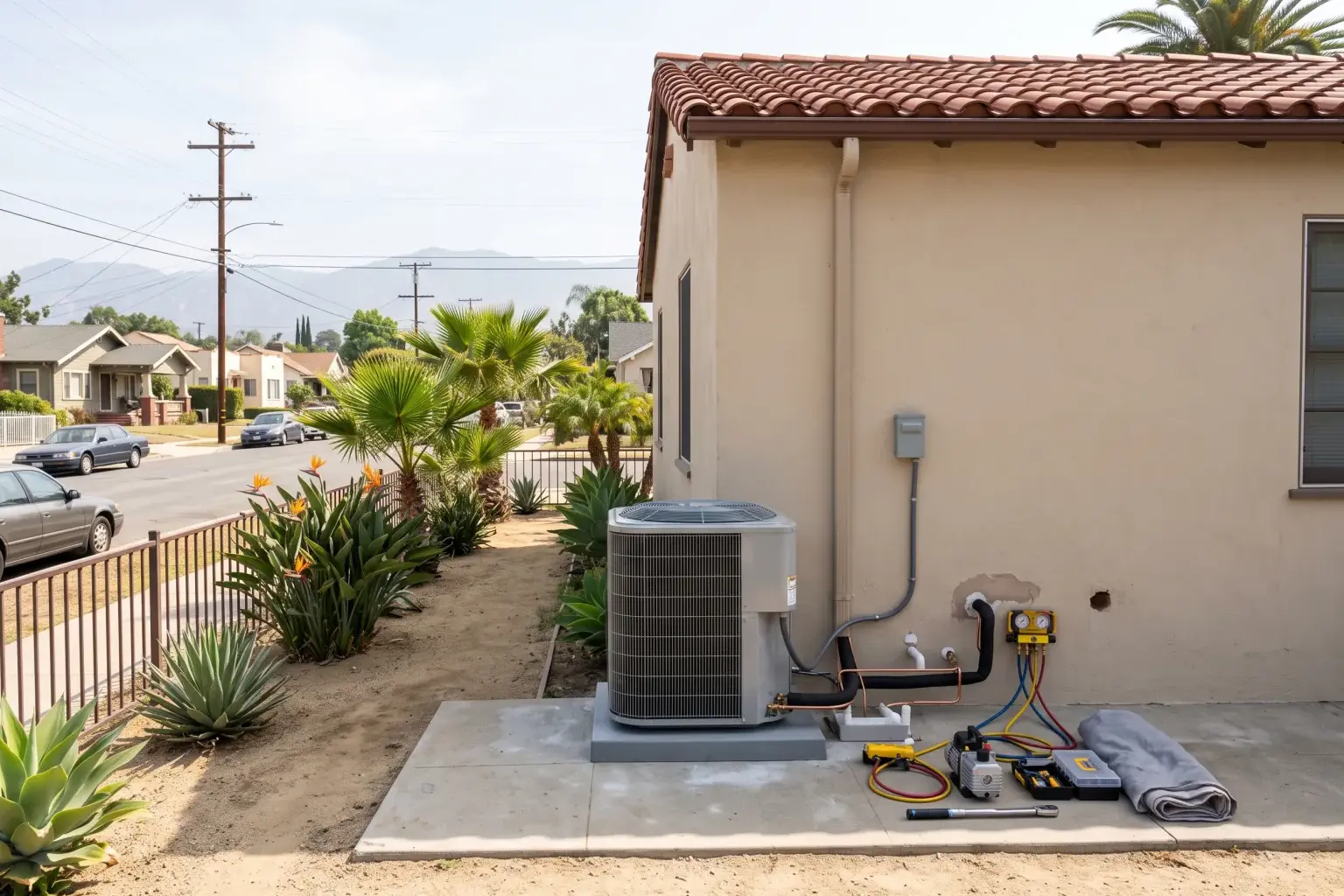
Installation day: we protect floors and work areas, remove and haul away the old equipment, set the new indoor and outdoor units, and connect refrigerant lines, wiring, and the condensate drain. Any duct or electrical changes in the agreed scope are done at the same time. A straightforward swap often takes a day; jobs with ductwork or panel work can take longer, and we'll tell you up front.
Before we leave: we start the system and check airflow, refrigerant charge, and the temperature difference between supply and return air. We set up the thermostat, show you how to change the filter, and coordinate the inspection if your city requires a permit. If a rebate may apply, we'll explain what paperwork you'll need after installation.
AC Installation by city
- AC Installation in InglewoodLocal service & repairs
- AC Installation in Huntington ParkLocal service & repairs
- AC Installation in VernonLocal service & repairs
- AC Installation in HawthorneLocal service & repairs
- AC Installation in GardenaLocal service & repairs
- AC Installation in South GateLocal service & repairs
- AC Installation in LynwoodLocal service & repairs
- AC Installation in MaywoodLocal service & repairs
- AC Installation in CudahyLocal service & repairs
- AC Installation in ComptonLocal service & repairs
- AC Installation in BellLocal service & repairs
- AC Installation in LawndaleLocal service & repairs