
The short answer
Duct cleaning is worth it when something specific is in your ducts, like construction dust, pest debris, or heavy buildup, not on a fixed schedule. AirEdge inspects the whole air path first, then recommends cleaning, repair, or replacement based on what we find, with a written estimate before any work starts.
Your ducts carry every bit of air your furnace, air conditioner, or heat pump moves through the house. When they collect dust, debris, or pests, or when joints come loose in the attic, you end up breathing what's in them and paying to heat or cool spaces you never use. AirEdge HVAC Repair Service cleans, inspects, and repairs ductwork for homeowners in Los Angeles and nearby cities. We look first, tell you what we actually found, and recommend cleaning only when cleaning is what the system needs.
Signs Your Ducts Need Attention
Duct cleaning isn't a routine chore like changing a filter. Most homes don't need it on a schedule. It makes sense when something specific has gotten into the system, or when the air coming out of the vents tells you something is wrong. In Los Angeles, dry summers and fall Santa Ana winds push fine dust into attics and crawlspaces, and leaky ducts can pull that dust straight into the airstream.
- Dust puffs out of supply registers when the system starts, or settles on furniture soon after you clean
- Visible buildup, debris, or gray fuzz on register grilles and in the first few inches of duct behind them
- A musty or stale smell when the heat or air conditioning runs
- Signs of rodents or insects, such as droppings, nesting material, or chewed insulation near ducts
- Recent remodeling, drywall work, or sanding that left construction dust in the house
- Moving into a home where you don't know when, or if, the ducts were ever serviced
- Some rooms getting noticeably less airflow than others
What We Check During a Duct Inspection
Before we recommend anything, we look at the whole air path, not just the vents. Cleaning ducts that are crushed, disconnected, or leaking into the attic won't fix the problem you called about.
If we use a camera to look inside runs we can't see directly, we'll show you the footage. You'll know what's in there before deciding anything.
- Supply and return registers, grilles, and the duct sections right behind them
- Main trunk lines and branch runs we can reach, including in the attic or under the house
- Flex duct for kinks, sags, crushed sections, and torn or missing outer jackets
- Connections at the plenum, boots, and fittings for gaps, failed tape, or separated joints
- Duct insulation, especially on runs through hot attics
- The return side, where leaks can draw in attic or garage air
- The air filter, filter rack, and blower area for buildup that would recontaminate clean ducts
- The evaporator coil and drain area for moisture or growth that can cause odors
Clean, Repair, or Replace
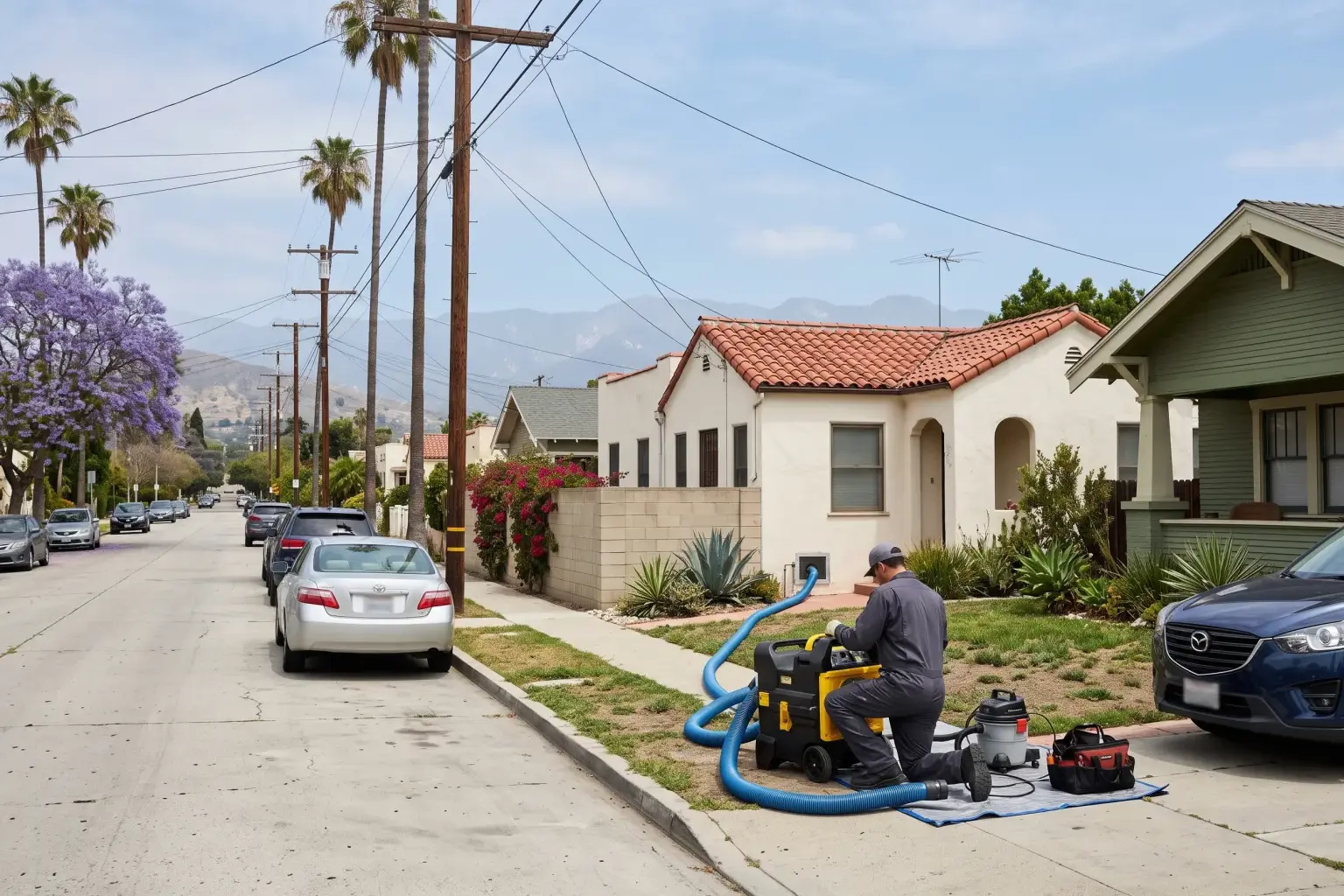
Cleaning makes sense when the ducts are structurally sound but dirty: construction dust, pest debris, or heavy buildup. We use negative-pressure equipment to pull loosened debris out of the system rather than blowing it around the house, then clean the registers and blower area so dirt doesn't come right back.
Repair is the right call when most of the ductwork is in good shape but specific sections are failing. That might mean resealing leaky joints with mastic or approved tape, reconnecting a run that has dropped off its boot, replacing a crushed length of flex duct, or adding hangers so a sagging line stops restricting airflow.
Replacement is worth considering when the ducts are old, brittle, poorly insulated, or damaged throughout, or when the layout simply doesn't deliver air where you need it. Older flex duct in a hot attic can break down over time, and patching it piece by piece stops making sense. Replacement also often comes up alongside a new system. If you're switching from a gas furnace to a heat pump, the ducts may need resizing for the new equipment's airflow. LADWP residential electric customers can apply for rebates on qualifying heat pump systems after installation, while homes served by Southern California Edison have different programs, so we confirm the current offer for your address before quoting it. The federal 25C tax credit is not available for heat pumps installed after December 31, 2025. If you're replacing a gas furnace instead, South Coast AQMD emission rules apply to new furnaces, and the district revises its compliance dates, so check the current rule before you plan.
We'll explain which option fits and why. If cleaning alone won't solve your airflow or dust problem, we'll say so.
What Affects the Cost
We don't quote duct work sight unseen, because the price depends on what we find. These are the main factors:
You'll get a written estimate that breaks out cleaning, repairs, and any replacement work so you can choose what to do.
- Home size and the number of supply and return vents
- How many systems the home has and the total length of duct
- Access: tight attics, low crawlspaces, and ducts behind finished ceilings take more time
- Type and condition of the ducts, since flex duct, sheet metal, and duct board are handled differently
- How much debris is present, and whether pest contamination needs extra cleanup
- Whether repairs, sealing, or insulation work are needed in addition to cleaning
- Whether the coil, blower, or other equipment also needs cleaning
- For replacement, the materials, layout changes, and any sizing changes for new equipment
How a Visit Works
When you call, we'll ask what you're noticing, how old the system is, and where the ducts run. That helps us bring the right equipment and set aside enough time.
At your home, the technician starts with the inspection described above and walks you through what they found, with photos or camera footage where it helps. You get your options and the estimate before any work starts.
If you approve cleaning, we protect floors near registers and the air handler, seal off vents, and connect the vacuum equipment to the system. We work through the supply and return runs, clean the registers, and check the blower area. If repairs are part of the job, we handle them during the same visit when time and materials allow.
Before we leave, we replace the filter or recommend the right one, run the system, and check airflow at the vents. We'll also tell you what to watch for, such as dust returning quickly, which can point to a leak on the return side.